
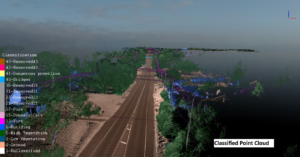
Precision LiDAR Road Survey - Vegetation & Powerline Clearance Analysis
Using LiDAR to perform a road survey is very useful. It can provide accurate results with little time and effort. The survey will deliver a digital 3D model of the road, which can be used for a variety of purposes. The LiDAR point cloud data can also be colorized which allows engineers to identify the road obstacles better and easier. This information can help with the planning of transport rountes and determine the dimension limitations of the loads to be transported.
LIDAR works in a similar way to radar or sonar. A beam of light is fired from a sensor and bounces back from whatever hits it. The sensor can then collect information about objects that reflect the beam. The amount of time that it takes for the light to return will determine how far it was from the source. This allows for accurate measurements, which are necessary for gauging severity and estimating required materials and equipment.
LIDAR is a great option for a road survey, as it can be used day or night, and it delivers precise results. It also provides centimeter level accuracy, which can save a significant amount of time. It can also be used to provide accurate height clearance analysis for bridges and overhead powerlines.
When used for highway and street surveying, the system can be used to produce high-quality 3D models. This can be done by combining the data with the LiDAR360 MLS for feature extractions, like road marks, light poles, road signs and other road infrastructures. It can be produced in several formats, including AutoCAD DXF files and Arc GIS shape files. This allows the engineer to produce a comprehensive road profile, which can be utilized for height clearance analysis and swept-path analysis for over-dimensional load transport.
While on the construction site, for example in the wind farms, the LiDAR can scan the road, turbine hardstand, and surrounding terrain with centimeter accuracy and georeference coordinates. The data acquired can generate 3D model that can be used for as-built quality control by civil contractor, as well as to get road gradient, horizontal turning radius, crest and sag to allow transport company for transportation feasibility study and selecting the right equipment to bring the wind turbine components to each wind turbine hardstand.
Furthermore, when compared with previous LiDAR data, it can reveal signs of change in the road’s construction. This information is especially useful when conducting a road survey after a traffic accident or inclement weather events.
Airborne LiDAR can also be used for road surveys. The system can be flown in and out of the field quickly. It can collect information from an entire site in just a few minutes. This can eliminate the need to visit a site more than once, which can save a significant amount of money. It can also be used to create highly accurate terrain models. It can also measure distances, elevations, and other site information.
Regardless of the type of LiDAR that is used, the data that it produces is of great value to both civil and transport engineers. This can help with the planning of projects, as well as the maintenance of existing structures.
Vehicle-Mounted LiDAR Technology: Efficiency Meets Precision
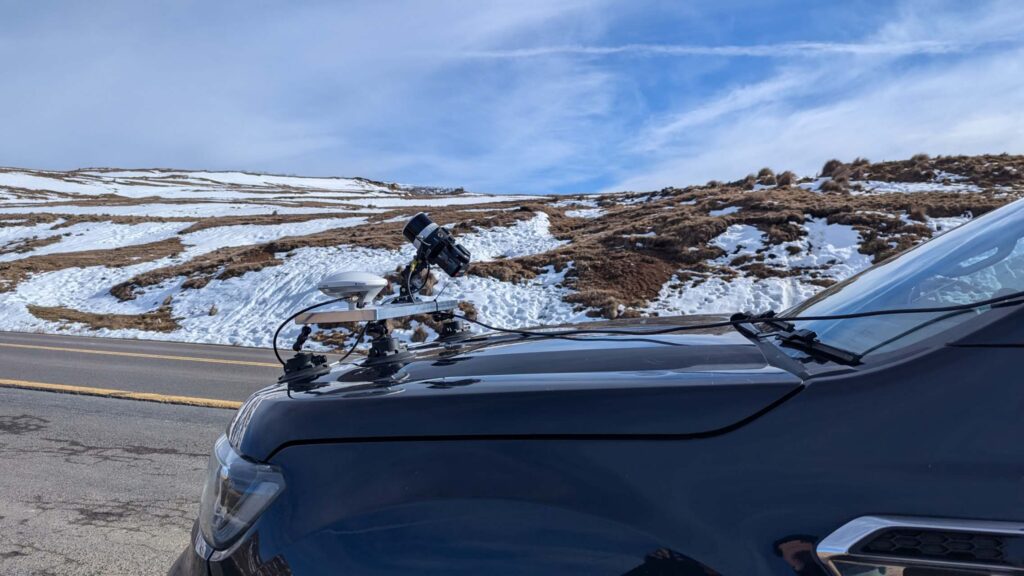
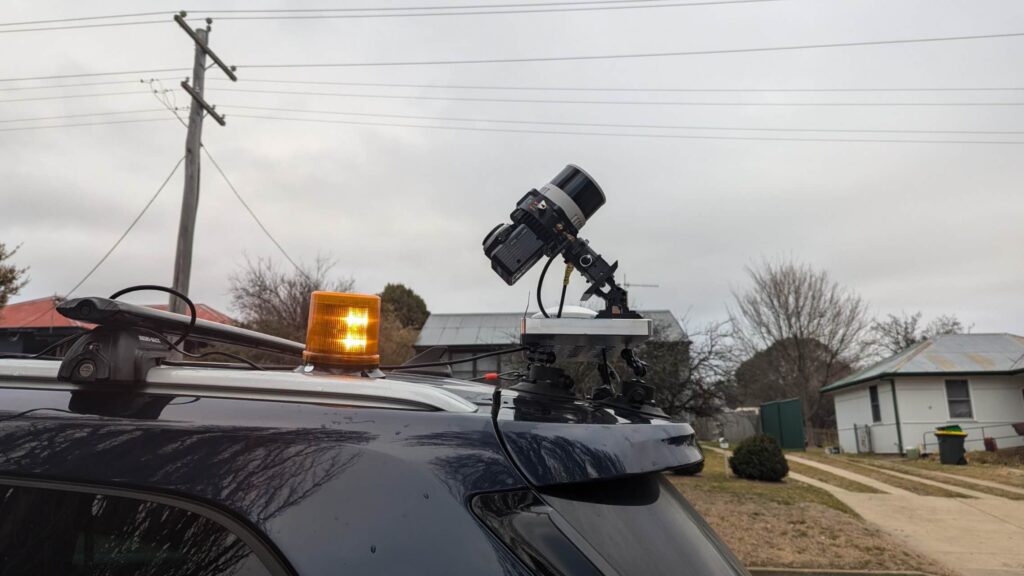
We utilize advanced vehicle-mounted LiDAR systems that combine high efficiency with exceptional accuracy. Our mobile survey approach allows rapid data collection without compromising detail quality.
Why Vehicle-mounted LiDAR?
Technology Overview
We utilize advanced vehicle-mounted LiDAR systems that combine high efficiency with exceptional accuracy. Our mobile survey approach allows rapid data collection without compromising detail quality.
Key Capability
Our systems can survey 200-300 kilometers of road per day while capturing every essential feature and measurement. This unprecedented efficiency doesn’t sacrifice accuracy—we maintain millimeter-level precision across the entire survey area.
Process
The mobile LiDAR systems capture millions of data points per second, creating highly detailed 3D models of roads, surrounding vegetation, and infrastructure. This data forms the foundation for all our analysis and reporting.
Comprehensive Feature Extraction for Engineering & Planning
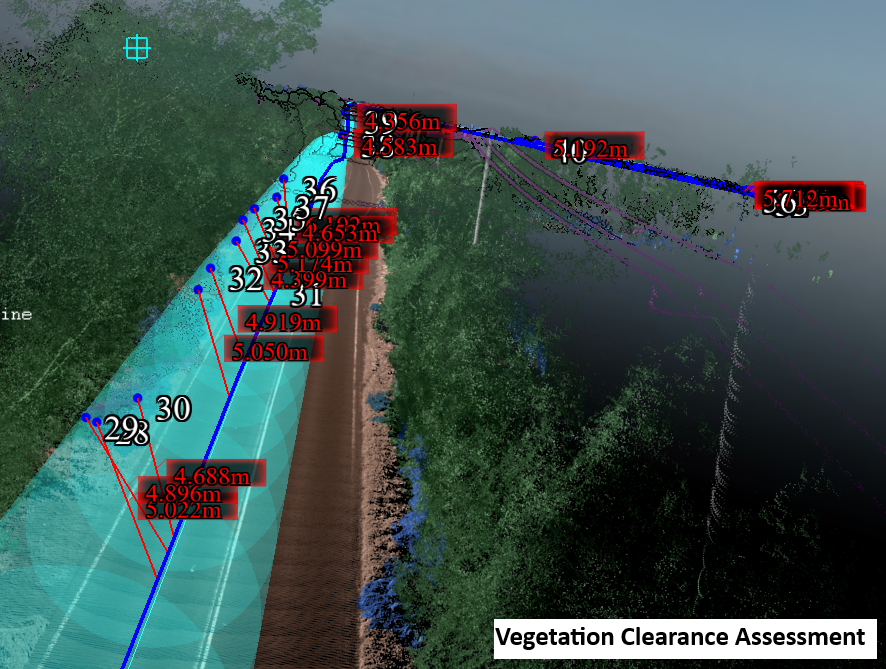
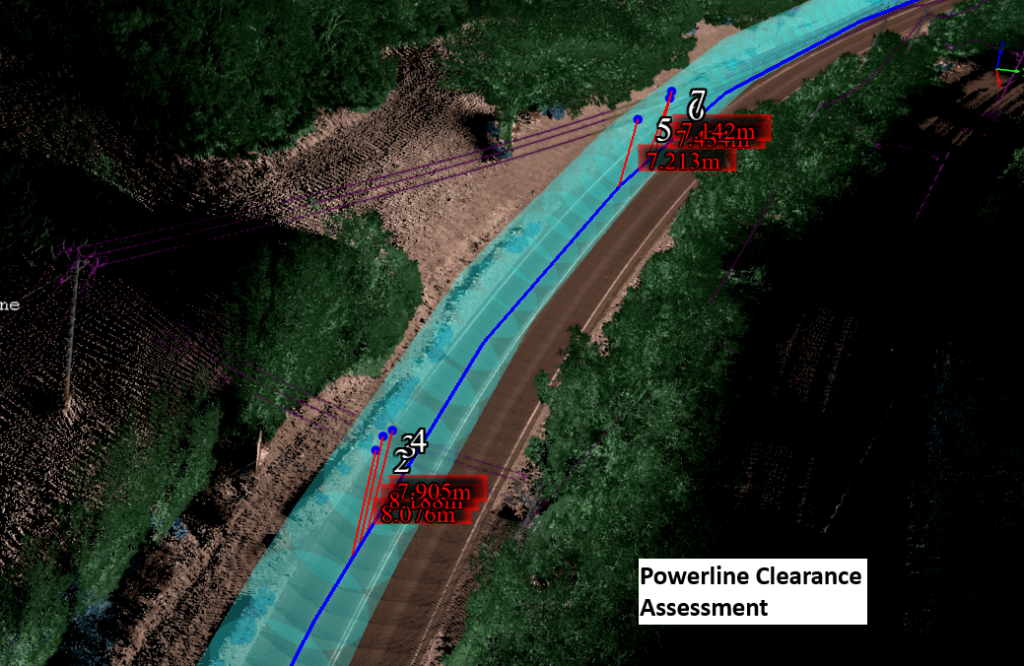
Powerline & Vegetation Clearance Analysis
LiDAR Solutions Australia provides specialized LiDAR road survey services for powerline and vegetation clearance analysis. Our detailed surveys ensure compliance with safety regulations and help prevent vegetation-related power outages.
Customized Load Profile Analysis
We perform clearance analysis according to customized load profiles, ensuring precise assessment for specific infrastructure requirements and operational scenarios. Our tailored approach accounts for various vehicle types, load heights, and regulatory requirements.
Road Upgrade & Transport Surveys
Our LiDAR surveys support road upgrade projects, particularly for overload transport routes. We provide the detailed terrain and feature data needed for engineering design and regulatory approval.
Road Infrastructure Features
Kerblines and road centerlines
Top and toe of the bank
Detailed ground surface models
Road signage identification and extraction
Utility & Environmental Features
Powerline location and height profiling
Utility pole positioning and condition assessment
Vegetation mapping and clearance analysis
Terrain modeling for drainage and construction planning
Transport Planning
Vertical and horizontal clearance measurements
Route analysis for oversized load transport
Road geometry assessment for upgrade projects
Safety assessment and compliance reporting
Contact Us for A quote and tailered solution
Case Studies
Using LiDAR to perform a road survey is very useful. It can provide accurate results with little time and effort. The survey will deliver a digital 3D model of the road, which can be used for a variety of purposes. The LiDAR point cloud data can also be colorized which allows engineers to identify the road obstacles better and easier. This information can help with the planning of transport rountes and determine the dimension limitations of the loads to be transported.

Unlocking Road Survey Efficiency with Advanced LiDAR Technology
We’re thrilled to announce the successful completion of a comprehensive wind turbine transport route assessment by using cutting-edge vehicle-mounted LiDAR technology for our valued customer,